
Frosted Glass Look Without the Price Tag: Decorative Window Film Ideas
Frosted glass looks expensive because it usually is. Ordering custom obscure or acid-etched panes for a bathroom window, a front door sidelight, or a glass office partition means paying for the glass, the labor to swap it, and a lead time measured in weeks. Decorative window film gives you that same soft, private, finished look, and it goes onto the glass you already own.
That gap matters in St. Louis, where a lot of the housing stock was not built with modern privacy in mind. Century-old homes in Tower Grove and Webster Groves have gorgeous original glass that nobody wants to rip out. Newer builds in the western suburbs have wide sidelights and open stair landings that put your entryway on display to the street.
Film solves both problems the same way. It changes what people can see through the glass without changing the glass itself, and it can come off later if your taste or your tenant changes. Below are the styles that actually get used in real homes, where they belong, and what you should expect to pay compared with a full glass replacement.
Why decorative window film gets you the frosted look for far less
Decorative window film is a thin polyester film with a matte, patterned, or textured finish that adheres to the interior face of your glass. Once it is squeegeed down and cured, it reads as the glass itself. Visitors do not notice a film on the window; they notice a frosted window.
The savings come from what you are not buying. There is no new glass, no removing sashes or door slabs, no re-glazing, no disposal, and no waiting on a custom order to arrive. Most rooms are done in a single visit.
The look is also easier to change. Etched glass is permanent, and you live with that choice for as long as you own the house. Film can be removed and replaced when you redecorate or when a buyer wants something different.
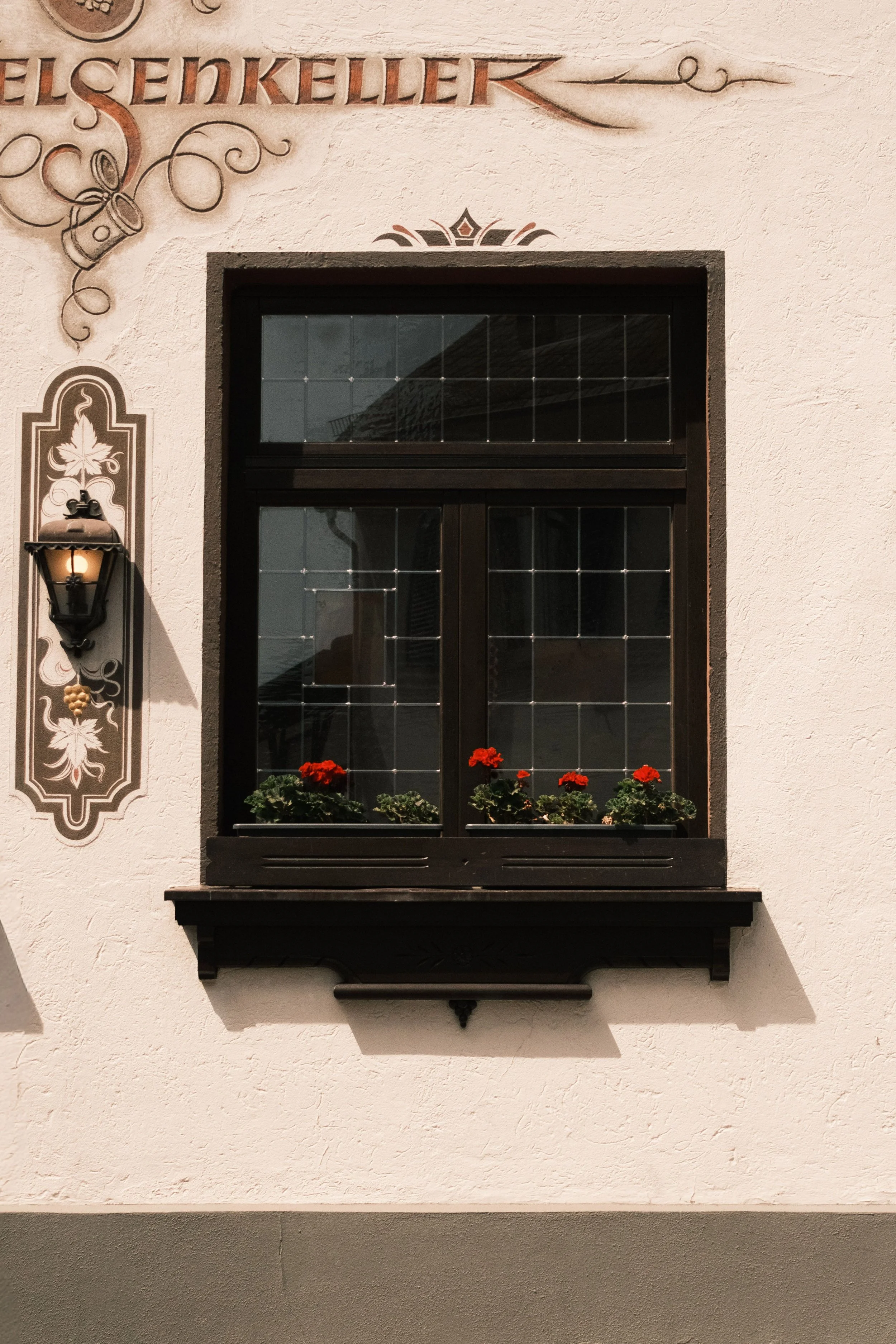
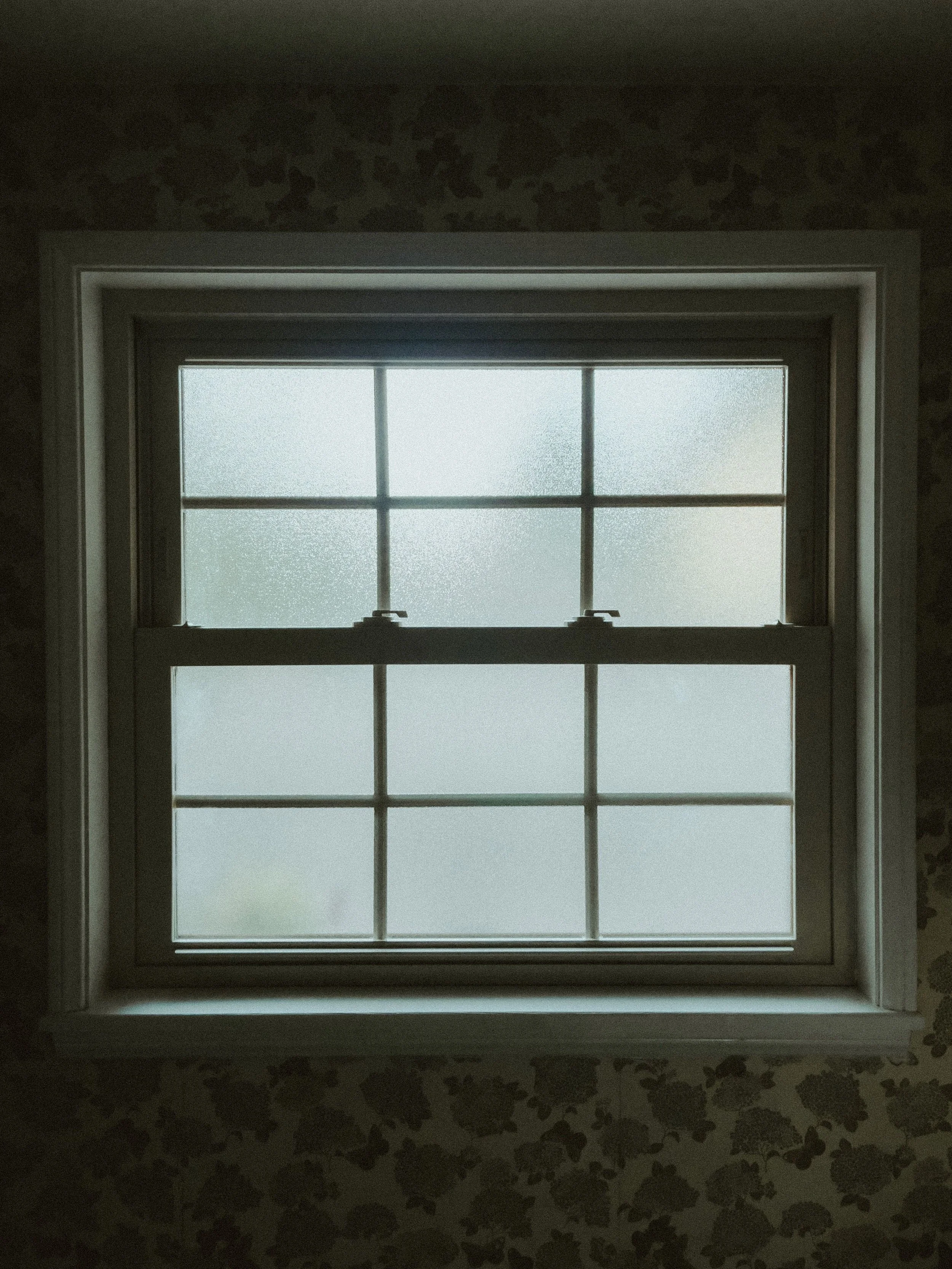
Decorative film styles that work in real St. Louis homes
Classic frost and acid-etch
This is the workhorse. A uniform matte finish that reads exactly like sandblasted or acid-etched glass, blocking the view completely while letting daylight pour through.
It suits bathrooms, powder rooms, front door glass, and any interior door where you want light to travel but not sightlines. If you are choosing one style and want it to still look right in ten years, choose this one.
Gradient and banded frost
Gradient film fades from solid frost at the bottom to clear at the top, so you keep a view of the sky and tree canopy while screening off anything at eye level. Banded film does the same job with a horizontal stripe of frost across the middle of the pane.
These are perfect for ground-floor rooms that face a sidewalk or a neighbor's driveway. You get privacy where you need it and keep the daylight and the view above it.
Linear, reeded, and geometric patterns
Fluted and reeded glass has been everywhere in design for the last few years, and film reproduces the effect convincingly. Vertical line patterns add texture and movement, while geometric prints work well on larger expanses of glass that would look flat in plain frost.
These read as intentional design rather than a privacy fix, which is why they show up so often on interior glass walls and home office partitions.
Custom-cut graphics and borders
Film can be cut to a shape, which opens up house numbers on a sidelight, a frosted border around a clear center panel, or a logo on a home office door. For small businesses working out of a storefront or suite, this is the least expensive way to get branded glass, and it pairs naturally with Commercial Window Tinting Page work on the same building.
Where decorative film makes the biggest visual difference
Front entries are the first place most homeowners notice the problem. Sidelights and door glass show your foyer, your staircase, and whoever is standing in it to anyone on the porch. A frosted or gradient panel fixes that in an afternoon and usually makes the entry look more finished than it did before.
Bathrooms are the second. Older St. Louis bathrooms often have a single window sized for ventilation, not privacy, and hanging a blind over it means giving up most of the daylight in an already small room.
After that, look at stair landings, transom windows, interior glass doors, and shower enclosures. Basement egress windows at grade level are another easy win, since frost stops the sidewalk view without darkening the room the way a curtain would.
What decorative window film costs compared with replacing the glass
Film is priced per square foot of glass, and a typical residential job covers a handful of panes rather than a whole house. That keeps most decorative projects in the range of a weekend furniture purchase rather than a home renovation.
Replacing the same glass with true obscure or etched panes carries the cost of the material, the installation labor, and often new hardware or trim work. On a leaded or divided-light window, replacement may not even be possible without losing the character of the original.
The honest comparison is not just dollars, though. Replacement is permanent and disruptive. Film is quick, reversible, and leaves the original glass intact underneath, which is exactly why it wins in historic neighborhoods across St. Louis and St. Charles.
Getting an install that looks like glass, not like a sticker
The difference between a decorative film that looks custom and one that looks cheap comes down to preparation. Glass has to be scraped and cleaned to a surgical standard, because a single speck of dust trapped under a matte film shows up as a permanent bump in the finish. Edges matter too. Film should be cut to the glass line with a consistent, tight gap so it does not lift at the corners over time. Bubbles, fingernail-width gaps, and peeling edges are almost always installation problems rather than product problems.That is also why the warranty is worth reading before you buy. A lifetime guarantee on a professionally installed film means bubbling, peeling, or discoloration gets corrected rather than argued about. If you have questions about how a specific film behaves over time, please Contact Us and our team will be happy to help.
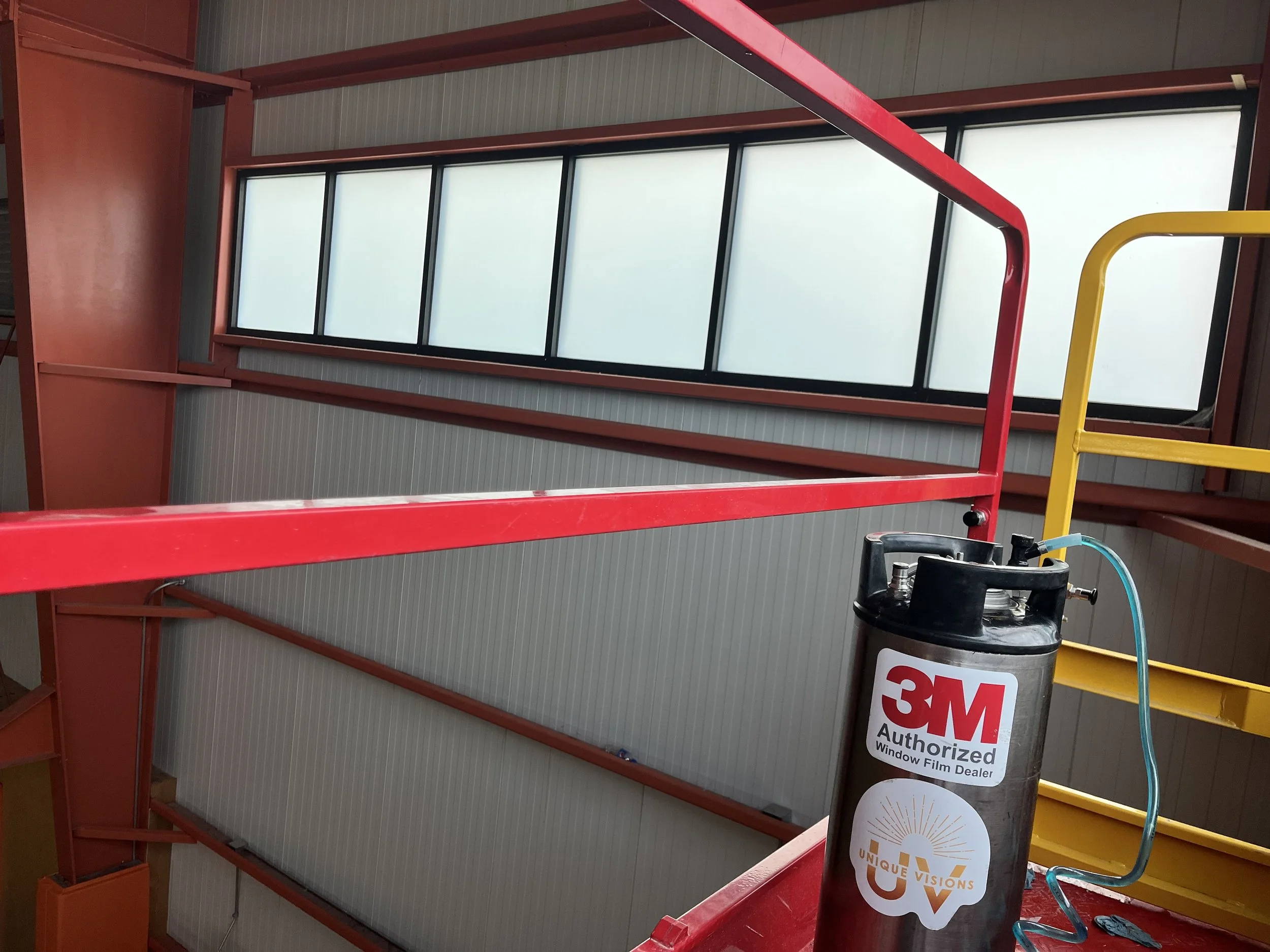
Pairing decorative film with solar film in the same home
Decorative film is chosen for how it looks. It is not designed to reject heat, so a west-facing living room that bakes every afternoon needs a different product on that glass.
Plenty of St. Louis homes end up with both: a solar control film on the big south and west windows to cut heat and glare, and decorative film on the bathrooms, entry, and interior glass. Handling both in one visit is common, and it is worth asking about when you get your Residential Solar Tinting Page estimate.
The bottom line for St. Louis homeowners
Decorative window film delivers the frosted, etched, and fluted glass looks that designers keep putting on mood boards, without the cost or the commitment of new glass. It works on original windows, it goes in fast, and it comes off cleanly if you change your mind.
Unique Visions Solar Tinting has covered more than 800 properties across Missouri with 3M certified installations, and every job is backed by a lifetime guarantee. If you are weighing frosted film against replacing a window, bring us the room and we will tell you honestly which one makes sense.
Contact Unique Visions Solar Tinting for a free estimate on decorative window film for your home or office, or explore our St. Louis window tinting services to see what else we handle in your area.