
Interior or Exterior Window Film: Which Side Does Yours Go On?
It seems like it should be obvious. If the sun is outside, surely the film belongs outside too. In practice almost all residential film is applied to the interior surface of the glass, and exterior window film is a specialist option used when the inside is not available.
The reason is simple. Film on the interior is protected from weather, hail, ice scrapers, lawn equipment and anything else Missouri throws at a house, so it lasts far longer and comes with stronger coverage.
That said, exterior film is not a lesser product. On certain glass it is the only safe choice, and on some buildings it is the only accessible surface. Knowing the difference stops you from paying for the wrong one.
Here is how installers decide, and what it means for a typical home in the St. Louis area.
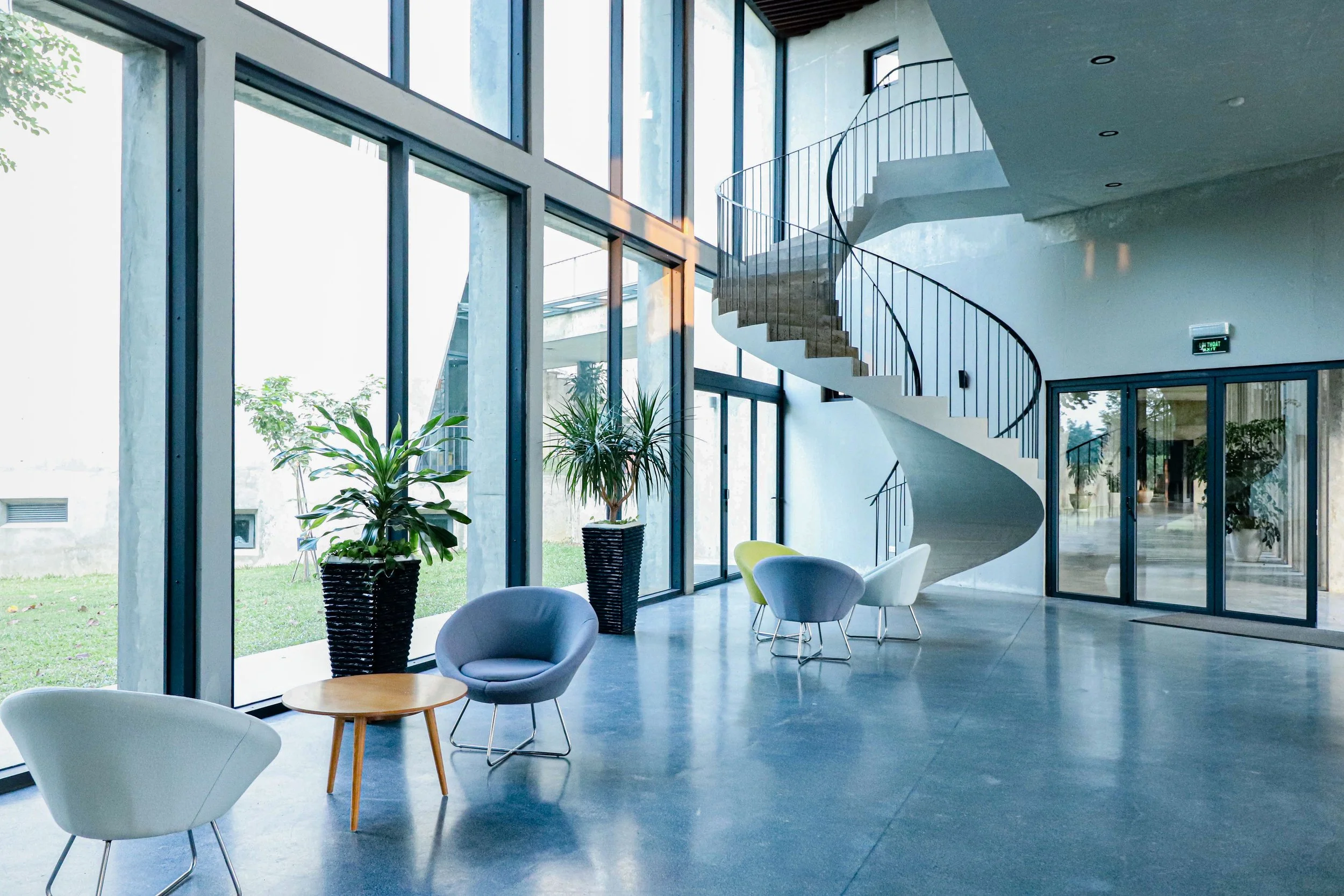
The short answer
Interior film is the default for homes. Exterior film is used when interior application is not possible or not advisable, most often on glass that cannot safely take an absorptive film, on fixed panes with no interior access, or on certain glazed units where the manufacturer specifies it.
Both block solar heat and ultraviolet light. The difference is where the energy is stopped and how the film is exposed to the elements afterwards.
Why most residential film goes on the interior
Protection is the main reason. Interior film never sees rain, freeze cycles, hail or a snow shovel, so its adhesive and coatings stay stable for far longer.
Maintenance is easier too. You clean it the way you clean the rest of the window, and there is no need to get on a ladder for second storey glass.
Warranties reflect this. Manufacturer coverage for interior applications is typically longer and broader than for exterior, because the operating environment is so much gentler.
And practically speaking, interior installation is faster, does not depend on weather on the day, and produces a cleaner finish because the work happens in a controlled space.
When exterior window film is the right call
There are four situations where it makes sense.
The first is glass that cannot take interior film safely. Some laminated, low emissivity or already tinted units absorb too much heat when film is added on the inside, and moving to the exterior avoids building that stress inside the sealed unit.
The second is inaccessible glass. Fixed skylights, atrium panels and sealed architectural glazing sometimes leave no practical interior surface to work on.
The third is stopping heat before it enters. Exterior film rejects solar energy at the outer surface, which can be an advantage on glass that runs very hot.
The fourth is commercial glazing, where curtain wall systems and occupied floors often make exterior access the simpler route. That scenario is covered in more detail on our Commercial Window Tinting Page.
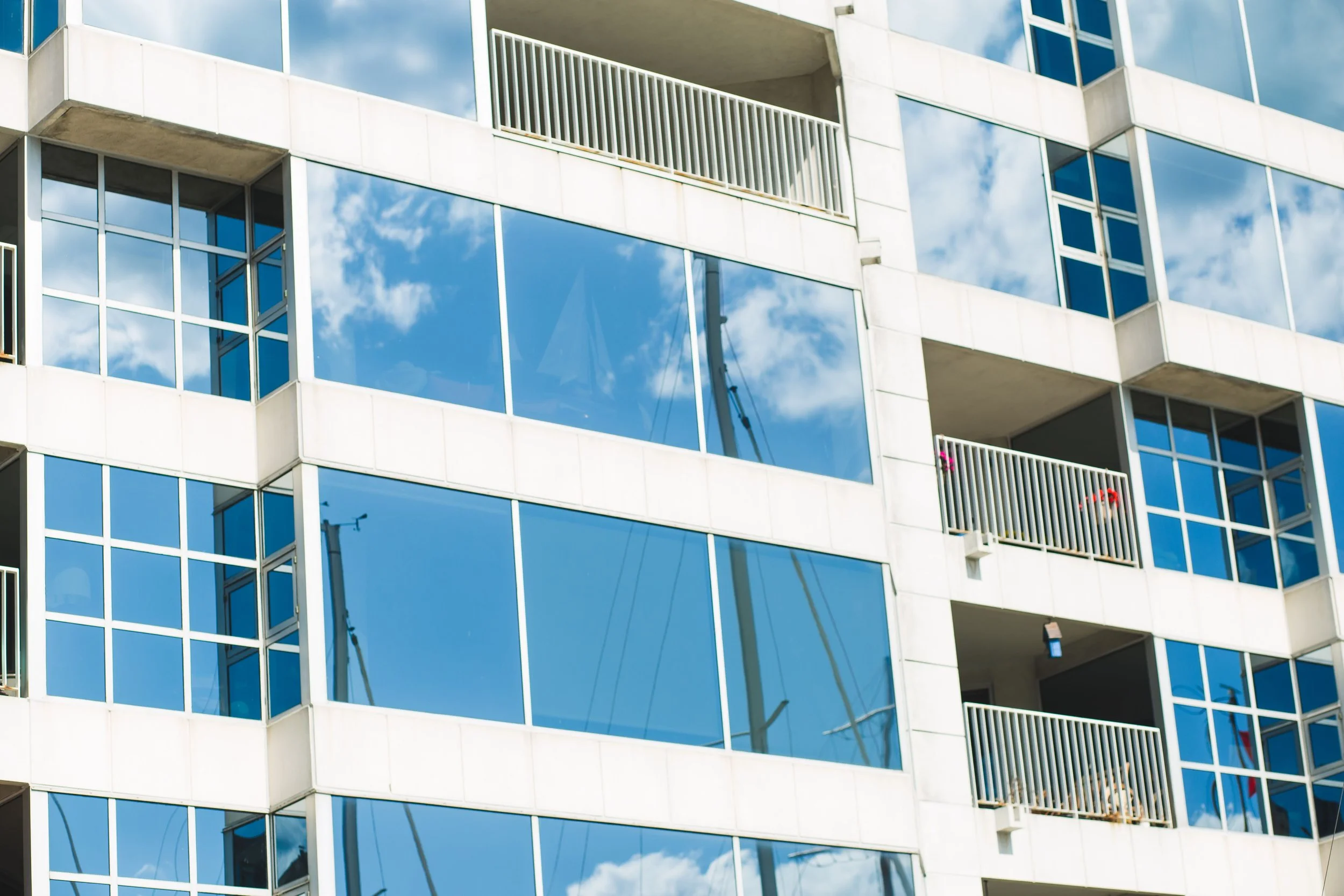
Interior vs exterior window film: the practical differences
Expected life is the biggest one. Exterior film faces ultraviolet light, temperature swings, moisture and physical contact directly, so it is engineered with harder coatings and still carries a shorter service expectation than an equivalent interior product.
Cleaning differs as well. Exterior film needs a soft cloth and a gentle cleaner, and it does not tolerate abrasive pads, pressure washing or ice scrapers. Anyone else who works on the house, from window cleaners to landscapers, needs to know it is there.
Cost tends to be higher for exterior work because of access, weather scheduling and the film construction itself. Warranty terms are usually shorter. None of that makes it a bad option, but it does mean it should be chosen for a reason rather than a hunch.
What this means for homes around St. Louis
The Missouri climate is exactly why interior remains the default here. Freeze and thaw cycles through winter, hail in spring and sustained heat in summer all work against anything mounted on the outside of a window.
For the vast majority of homes in the St. Louis metro, the recommendation will be an interior solar film matched to the glass type. Exterior film comes up on specific windows rather than whole houses, usually a skylight, a stairwell pane or a glass unit that the manufacturer has flagged.
A proper assessment identifies those windows individually. A house can absolutely end up with interior film on most openings and exterior film on one or two, and that is a sign of a careful survey rather than an inconsistent job.
Questions worth asking
Ask which surface the installer is recommending for each window and why. Ask what the expected service life and warranty are for that specific application. Ask how you should clean it afterwards, and whether anything in your usual maintenance routine needs to change.
If the answer to all of it is a single blanket recommendation for every window in the house, the glass was probably never examined. If you have more questions or want help choosing the right film, visit our Contact Us Page to speak with our team.
Getting the surface right
Interior for almost everything, exterior when the glass or the access demands it. That is the rule, and the only way to apply it correctly is to look at your actual windows.
Unique Visions Solar Tinting is a 3M certified installer with more than ten years of experience across Missouri, and every quote starts with identifying the glass rather than assuming it. Our residential options are outlined on the Residential Solar Tinting Page.
Book a free estimate and we will tell you which surface each window needs and exactly what to expect from it.